The Interview

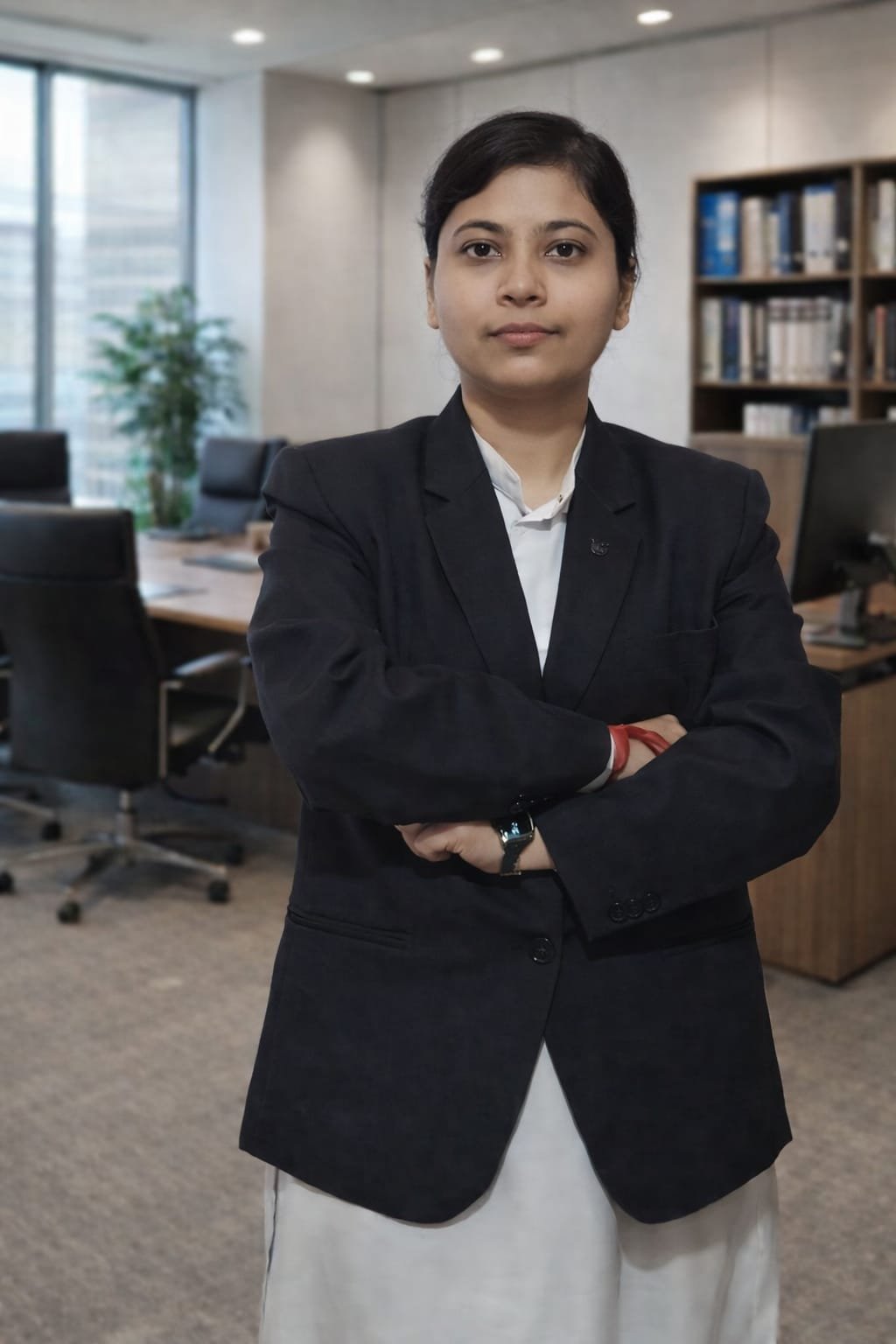
For readers meeting you for the first time: who are you, where are you in your legal education, and what pulled you toward law? Your LinkedIn says you want to understand law "not just as a set of rules, but as a force shaping everyday life". Where does that conviction come from?
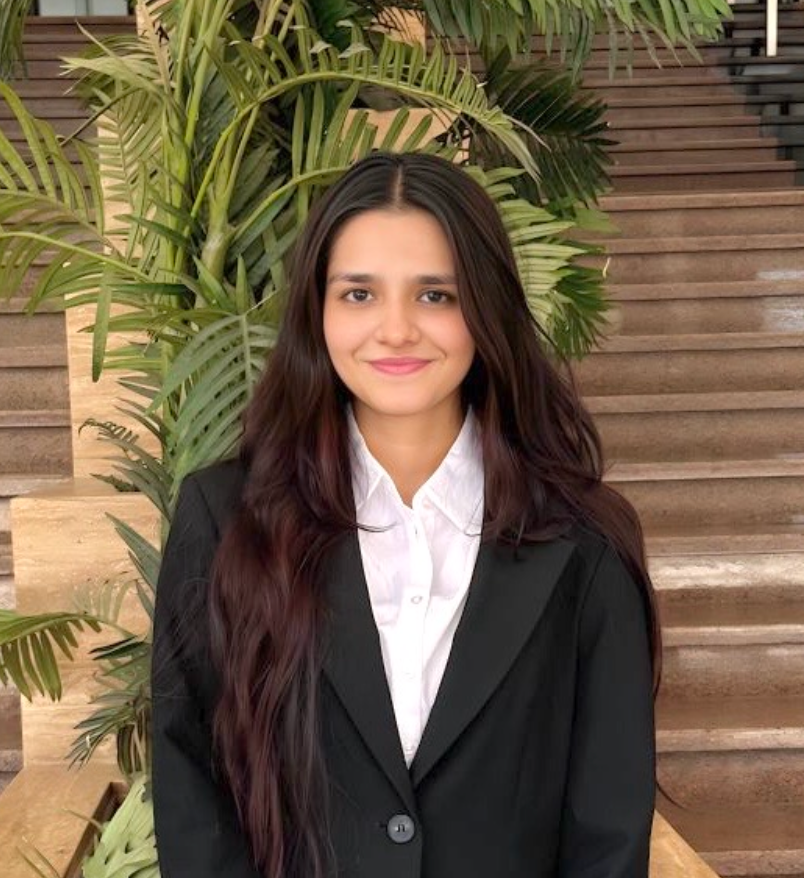
My interest in law began long before law school. Growing up, I had the opportunity to travel to different countries, and I was fascinated by how the same act could be perfectly acceptable in one place yet restricted or even illegal in another. It made me wonder why societies create different rules and what those differences reveal about their values.
As I grew older, I realised that laws do not exist in isolation, they evolve from the societies they govern. William Graham Sumner's distinction between folkways and mores helped me understand this: some customs remain social conventions, while others become so fundamental that they are eventually recognised and enforced as law. That perspective drew me to study law not as a collection of statutes, but as a discipline that explains how societies organise themselves and pursue justice.
Law school has only reinforced that belief. Through research, internships, mooting, and building NyaySahay, I’ve seen that law extends far beyond courtrooms. It shapes how people access justice, exercise their rights, and interact with the State. For me, law is most meaningful when it improves people's everyday lives, and that continues to guide both my legal education and the work I choose to pursue.
For a reader in Nairobi or New York who has never heard of it: what is NyaySahay, who is it for, and what can it do today? Decode the India-specific essentials for them, and tell us what NyaySahay is deliberately not trying to be.
In India, during periods of public unrest or mass detentions, emergency legal support is often coordinated by volunteer lawyers and civil society groups. Their contact details are typically shared across WhatsApp groups, PDFs, spreadsheets, and social media, making critical information difficult to find under pressure. NyaySahay brings these verified legal aid contacts into one offline, easily accessible platform.
Today, the app provides state-wise lawyer and legal aid directories, a concise "Know Your Rights" guide, emergency medical contacts, and other essential resources. It is designed for anyone who may suddenly need legal assistance, whether a student, journalist, protester, bystander, or a family member trying to help someone else.
Working offline was a deliberate choice. Internet shutdowns and network disruptions have accompanied periods of unrest in India, so we wanted to ensure that as long as someone's phone had battery, they could still access essential legal information.
Just as importantly, NyaySahay is not a substitute for lawyers, courts, or legal institutions. It does not provide AI-generated legal advice or recommend legal strategies. Its purpose is simply to bridge the gap between someone recognising they need legal help and being able to reach it quickly.
The app was built rapidly in response to an immediate need and is currently available as an Android APK. Bringing NyaySahay to iOS is our next major priority, and we would welcome collaborations that can help make that possible.
You told us the idea took shape while legal aid sat scattered across Excel sheets, WhatsApp forwards, and social media posts, as reports of police excesses grew. Take us to the exact moment you and your friend decided to stop watching and start building. And why the name NyaySahay, what does it mean to you?
As protests unfolded, my social media feeds were flooded with reports of detentions and countless WhatsApp forwards, PDFs, and Google Sheets containing emergency lawyer contacts. The legal community was doing remarkable work, but the information people needed was scattered across platforms.
Being based in Mumbai, I couldn't help on the ground in Delhi. I felt my legal education had to amount to more than watching events unfold from behind a screen. That's when I called my friend, Divij Butte. With his background in aerospace engineering and computer science and mine in law, we realised our skills complemented each other. I curated and verified lawyer contacts, emergency helplines, and rights-based resources, while Divij built the app's offline architecture. By the next morning, the first version of NyaySahay was live. Making it offline-first was intentional. We wanted people to have access to essential legal information even if internet connectivity failed.
The name reflects our philosophy. Nyay means justice and Sahay means assistance. We never intended the app to deliver justice or replace lawyers and courts. Its purpose is simply to help people access justice by ensuring they know their rights and can quickly reach the right legal help when they need it most. Looking back, I'm glad we didn't wait for perfection. In that moment, an imperfect tool available immediately was far more valuable than a perfect one delivered too late.
"If it takes ten minutes to locate the right contact, that's ten minutes too long." Walk us through how that one line became design decisions: why offline-first, why one-tap calling, why a state-wise directory? What did designing for an internet shutdown force you to leave out?
First, NyaySahay is offline-first. During periods of unrest, internet shutdowns and network disruptions can make online resources inaccessible, so all essential information, including lawyer contacts, emergency medical directories, the "Know Your Rights" guide, and a protest preparedness checklist, is stored directly on the device.
Second, we built one-tap calling. In an emergency, people shouldn't have to copy numbers from PDFs or switch between apps. They can simply select their state, choose a lawyer, and call immediately.
Third, we organised the directory state-wise. India's legal aid network is largely decentralised, so users are immediately shown the most relevant lawyers instead of navigating one long national list.
Designing for an unreliable internet also meant deliberately leaving things out. We chose not to include AI legal advice, live databases, case tracking, or any feature that depended on constant connectivity. We prioritised reliability over complexity. NyaySahay is intentionally minimalist. We kept asking ourselves: If someone has only thirty seconds, what is the single most useful thing this app can do? Whether it's finding a lawyer, understanding their legal rights, locating emergency medical help, or checking what essentials to carry before attending a protest, every feature exists to remove friction when time matters most.
You built NyaySahay with a friend, and it is not your first build: at the Harvard Youth Lead the Change programme you worked on TherapAI, a project on student mental health. How do the two of you split the work, and what has shipping something real taught you that law school could not?
Our roles were clearly divided. I focused on the legal side: curating and verifying lawyer contacts, compiling emergency medical resources, preparing the "Know Your Rights" guide, and thinking through the user experience from the perspective of someone in crisis. Divij built the technology, from the offline architecture to the one-tap calling functionality. I often say that I built the content and the problem statement, while he built the technology that brought it to life.
NyaySahay also wasn't my first experience building a technology-driven solution. During the Harvard Youth Lead the Change programme, my team developed TherapAI, a student mental health initiative. Although the problems were different, the philosophy was remarkably similar: technology shouldn't replace professionals; it should make them more accessible. Just as TherapAI wasn't trying to replace therapists, NyaySahay isn't trying to replace lawyers.
The biggest lesson I've learned from shipping real products is that identifying a problem is only the beginning. The real challenge is creating something that people can actually use. Law school teaches me how legal systems are designed to work, but building products has taught me how people interact with those systems under pressure. It's also taught me that impact often matters more than perfection. Today, I don't just ask, "Is this legally accurate?" I also ask, "Is it useful? Can someone access it in seconds? Will it genuinely help when they need it most?" That user-first mindset is something no classroom could have taught me.
A directory people reach for in a crisis has to be right. A wrong or stale number costs exactly the minutes you set out to save. How do you source and verify advocate contact details, keep them current, and think about the responsibility that comes with publishing them?
Our role was to consolidate that information into a single, structured, offline platform and verify it before including it in the app. Wherever possible, we cross-checked contact details across multiple sources to minimise the risk of inaccuracies. We also tried to include multiple advocates for each state because, in an emergency, a single unavailable phone number can cost valuable time. If one lawyer couldn't answer, users would have alternative contacts to reach immediately.
We recognise that no directory is ever truly complete. Lawyers may change numbers, volunteer networks evolve, and new legal aid initiatives emerge. Keeping the database current is therefore an ongoing responsibility, not a one-time exercise. As updated information becomes available through the organisations and networks we rely on, we review and incorporate those changes into subsequent versions of the app.
Ultimately, publishing a legal directory carries a significant responsibility because people may rely on it in some of the most stressful moments of their lives. That is why we've always prioritised reliability over volume. We'd rather provide a smaller, carefully verified directory with multiple points of contact than an exhaustive database that people cannot depend on when it matters most.
Beyond the directory, NyaySahay carries a protest preparedness checklist, medical and emergency help directories, and key legal rights resources. How do you decide what a person in crisis needs first, and how do you keep that content correct as laws change? Did your DPDP Act research at Cyberpleaders LLP change how you build for people at their most vulnerable?
Although the first version was built overnight, we never treated it as complete. I actively sought feedback from my professors, and one of them suggested that we rethink the way information was organised. Her advice was simple but invaluable: in a crisis, users shouldn't have to decide where to look first, the app should make that decision for them. That feedback led to NyaySahay 2.0, where every feature was reordered by urgency rather than category.
Today, the app begins with Know Your Rights, followed by the Legal Aid Directory and Legal Volunteers, allowing users to understand their immediate legal protections and connect with assistance within seconds. This is followed by Medical Volunteers, Emergency Contacts, and a First Aid section, recognising that legal crises can quickly become medical emergencies. We also included a Protest Preparedness Checklist because the best emergency response often begins before an emergency occurs.
Keeping the content accurate is an ongoing responsibility. We deliberately prioritised information that is relatively stable: constitutional rights, procedural safeguards, verified lawyer contacts, emergency helplines, and first-aid guidance, while regularly reviewing the database as contact details, judicial developments, or legal procedures evolve.
My internship at Cyberpleaders LLP, where I researched the Digital Personal Data Protection Act, also influenced the way we built NyaySahay. The DPDP Act emphasises principles such as purpose limitation, data minimisation, and processing only what is necessary. That reinforced our belief that people seeking legal help should not have to trade their privacy for access to essential information. As a result, NyaySahay does not require users to create an account, disclose personal information, or share their location. The app functions entirely offline and does not collect user data. In moments of vulnerability, privacy is not just a compliance requirement, it is part of building trust. For me, good legal technology is defined not only by what it enables, but also by the data it consciously chooses not to collect.
Away from the app: you won the Best Speaker award at the 3rd Novice Moot Court Competition, held Model UN leadership roles from Mumbai to London to Guangzhou, and joined the LCIA's Young International Arbitration Group. What did mooting and MUN teach you that a classroom could not, and what draws you to arbitration and mediation?
Mooting made me comfortable with pressure. It taught me to think on my feet, defend a position I believed in, and sometimes defend one I didn't. It also taught me that preparation gives you confidence, but curiosity makes you a better lawyer. The best rounds were never the ones where I spoke the most, they were the ones where I listened carefully enough to answer the question that was actually being asked.
MUN gave me something different. It showed me that people can look at the exact same facts and reach completely different conclusions because they're coming from different histories, interests, and incentives. Chairing committees across Mumbai, London, and China made me realise that most conflicts aren't caused by a lack of intelligence, they're caused by people speaking past each other.
That's probably why arbitration and mediation appeal to me. I enjoy advocacy, but I'm even more interested in resolution. There's something incredibly satisfying about helping parties move from "Who's right?" to "How do we move forward?" I don't see dispute resolution as a less glamorous alternative to litigation. If anything, I think it demands a different kind of lawyer, someone who knows the law well enough to fight, but has the judgment to know when fighting isn't the best answer.
Second year of law school, the Moot Court Committee, internships, and a live app. What does your week honestly look like, and what have you had to say no to? To the law student reading this who has an idea but is waiting to feel qualified: what would you tell them about starting?
That said, I genuinely enjoy stretching myself. I like having a full day. I enjoy going out with my friends just as much as I enjoy sitting down to study or spending hours working on an app. I don't think it's about having more time than anyone else, we all get the same 24 hours. It's about deciding what matters to you and learning how to manage those hours well. Of course, there are days when something has to give, and more often than not, it's my sleep. There have definitely been nights where I've traded a few hours of rest just to make sure everything gets done.
What I've had to say no to is comfort. Sometimes that's saying no to opportunities that sound exciting simply because I know I can't do them justice. One thing I've learnt the hard way is that being busy isn't the same as making progress.
When we started building NyaySahay, I had never built an app. I wasn't a software developer, and I certainly didn't have all the answers. What I did have was a problem I cared enough about to try solving. The legal knowledge came from law school, the technical side came from people who knew more than I did, and everything else we figured out along the way.
Law students often think they need another internship, another certificate, another competition before they're "ready" to build something. I don't think that's true anymore. You'll probably never feel ready. Start anyway. Your first version will be imperfect, your ideas will change, and you'll make mistakes. But it's much easier to improve something that exists than to perfect something that's still sitting in your notes app.
Where do you want NyaySahay to be in two years, and where do you want Navya to be? And to close, rapid fire, one line each: a law you would pass tomorrow if you could; of the 20+ countries you have travelled, the one that taught you the most; moot court or Model UN, if you had to keep only one; and finish the sentence, "Justice becomes real when ..."
- A law I could pass tomorrow if I could : A Legal Aid Strengthening Act that ensures every police station and district court has a functional legal aid desk, with free and timely access to lawyers for those who cannot afford representation.
- Of the 20+ countries I have travelled to, the one that taught me the most: Singapore. It showed me how everyday acts can be criminalised differently across societies, sparking my interest in comparative law.
- Moot Court or Model UN, if I had to keep only one: Model UN as it taught me to negotiate before I learned to argue.
- Justice becomes real when it is accessible to the person who needs it most, not just admirable in principle.